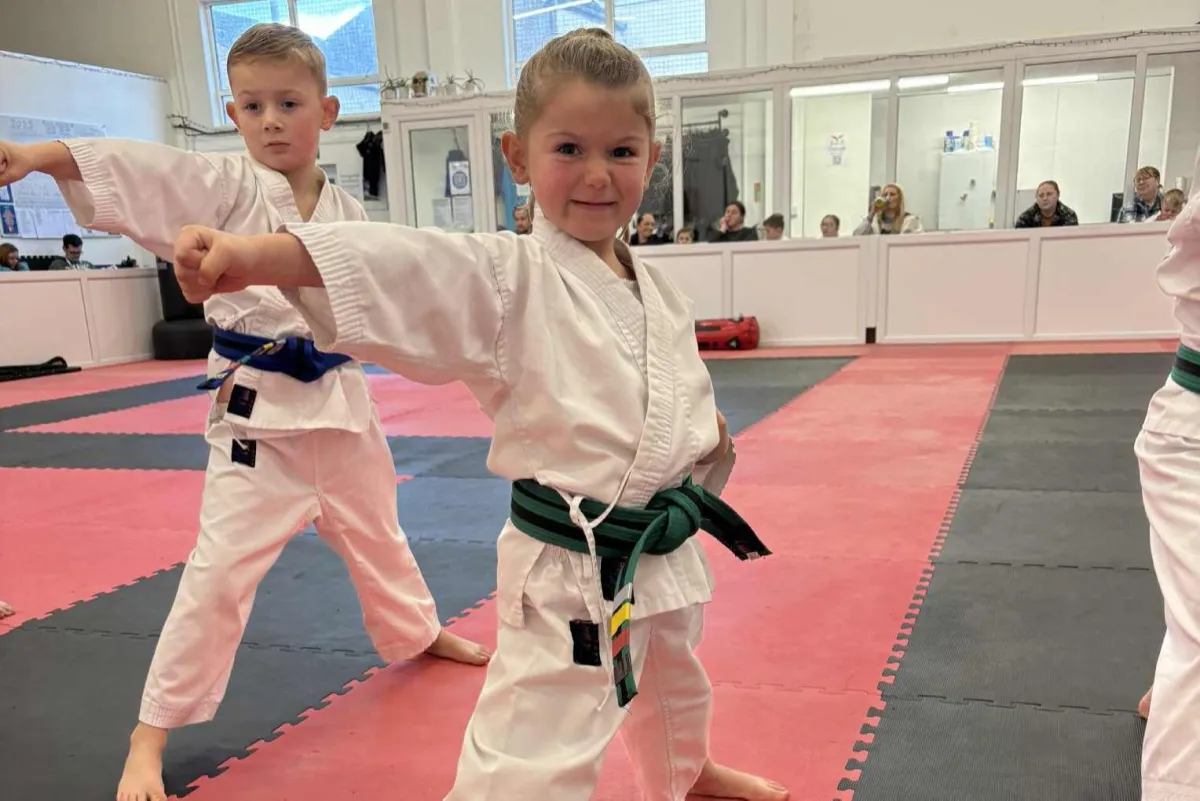
Why Your Child Needs Structure at Home (And How Martial Arts Reinforces It)
Why Your Child Needs Structure at Home (And How Martial Arts Reinforces It)
Do you have difficulties getting your children to follow through with actions and activities? Whether it’s homework, chores, getting ready for bed, or attending their martial arts class, do you find yourself in a constant battle of wills?
You’re not alone. And here’s the thing: it’s not really about the activity itself. It’s about something much deeper.
What Your Child Is Really Doing
When children resist, push back, or refuse to cooperate, they’re not being difficult for the sake of it. They’re testing boundaries and seeking control. It’s developmentally normal, and it’s predictable.
Children are constantly asking themselves: What can I get away with? How far can I push? Who’s really in charge here, me or my parents?
This isn’t defiance born from malice. It’s a child’s way of understanding the world. They’re looking for the edges of the rules so they know where they stand. They’re testing to see if the adults around them are consistent, calm, and in control, or if they can negotiate their way out of expectations.
The problem isn’t your child. The problem is what happens next.
The Critical Truth Parents Need to Hear
If your child decides what they do, when they do it, and how they do it, you’ve already lost.
Not lost in a dramatic sense. But lost in terms of your ability to guide them toward the character, discipline, and resilience they need to thrive.
Children don’t actually want to be in charge. It might look that way when they’re negotiating bedtime or refusing to get in the car for class. But deep down, children need adults to be the steady, consistent, boundaries presence in their lives. They need to know that the rules are non-negotiable and that the adults they depend on won’t cave under pressure.
When parents capitulate, when they give in to tantrums, negotiate endlessly, or let their child decide, the child doesn’t feel liberated. They feel unsafe. And they’ll keep testing, keep pushing, because they’re still looking for that solid boundary.
This Is Where 7SMA Comes In
I’ve been studying and teaching martial arts for over 40 years. I’ve specialised in Tang Soo Do for over 20 years, and I’ve been teaching professionally full-time since 2009. I’ve been coaching and instructing since I was 17. And in all that time, the most consistent pattern I’ve seen is this: the children who thrive aren’t the naturally talented ones. They’re the ones whose parents understand the importance of structure and consistency.
At Seven Star Martial Arts, we don’t just teach kicks and punches. We teach children what it looks like to operate within clear boundaries, to respect authority, and to work toward meaningful goals. But here’s the crucial part: we can’t do this alone.
The real transformation happens when parents understand what’s actually happening with their child and commit to being consistent at home.
The Three Pillars of Success
At 7SMA, we talk about three pillars that support your child’s character development:
1. Good attitude and behavior at home. This is where the foundation is built. The structure, consistency, and boundaries you set at home matter most.
2. Good attitude and behavior at school. This is where they apply what they’re learning. The discipline, focus, and social skills your child develops in the classroom.
3. Good attitude and behavior at class. This is where they see it all come together. The physical practice, community, and expert guidance they receive in our dojang.
All three pillars matter equally. If one is weak, the whole structure wobbles. And the pillar most parents neglect? Home.
The Weekly Training Planner: Structure Made Visible
One of the most powerful tools we use at 7SMA is the weekly training planner. It’s simple, but it works because it addresses something fundamental: children need to see what’s expected of them.
The weekly training planner isn’t just about martial arts practice. It encompasses everything: homework completion, chores, learning new life skills, and yes, attending class on time. Every day has three simple tasks. Every completed task gets a tick. Every accumulated tick builds a visual sense of progress and achievement.
Why does this work?
Clarity. Children know exactly what’s expected. No ambiguity. No room for negotiation.
Visual reinforcement. Ticks on a chart aren’t abstract. They’re concrete proof of progress. Kids see the accumulation and feel the momentum.
Compartmentalization. By breaking the week into daily tasks, children don’t feel overwhelmed. They focus on today, not the whole week.
Feedback loop. Each completed task triggers a small win. Small wins compound into confidence. Confidence builds intrinsic motivation.
When combined with our online training videos, stretching routines, basic drills, and exercise videos, the planner extends the structure of the dojang into the home. Your child isn’t just attending class twice a week. They’re practicing consistency every single day.
The 'Novelty' Period: What to Expect
Here’s something I tell every parent during enrollment: there will come a moment when your child says they don’t want to come to class anymore.
It might happen after two weeks. It might happen after two months. It might happen after six months. But it will happen. And when it does, most parents panic. They think their child has lost interest. They think martial arts isn’t the right fit.
This is almost never true.
What’s actually happening is the novelty period is wearing off, and your child is testing boundaries. They’ll say things like:
·“I’m bored.”
·“I don’t like it anymore.”
·“I want to do something different.”
None of these statements are necessarily true. They’re boundary tests. Your child is asking: Will my parent let me quit when things get less exciting? Will they cave if I complain?
The parents who understand this, who recognize it as a normal, predictable phase, are the ones whose children stay enrolled, progress through belt levels, and develop real discipline and resilience.
The parents who don’t understand it? They often give in. And their child learns that persistence isn’t required; quitting is always an option.
Free Strategies to Try at Home
If you’re struggling with consistency, here’s where to start. You don’t need to enroll in martial arts classes to begin building structure. You can start today.
Download our free Weekly Training Planner template and implement it at home. Here’s how:
Step 1: Define three daily tasks. These should be non-negotiable expectations: homework by 6pm, one chore completed, one new life skill practiced (learning to cook, tying shoes, organizing their room). Make them age-appropriate but challenging.
Step 2: Make it visual. Print the planner and put it somewhere your child sees it daily. Use a pen or stickers for ticks. The visual accumulation matters.
Step 3: Explain the why. Don’t just say “do your homework.” Say: “We do homework by 6pm so you have time to relax and play before bed. It helps your brain learn better, and it teaches you responsibility.” Children respond to clarity and purpose.
Step 4: Stay consistent. This is the hard part. When your child resists, and they will, you don’t negotiate. You don’t cajole. You calmly, firmly state the expectation: “This is what we’re doing. I know it’s hard sometimes, but I believe in you.”
Step 5: Celebrate progress. When your child completes their tasks, acknowledge it. Not with rewards or bribes, but with genuine recognition: “You did what you said you’d do. That takes discipline.”
This simple structure teaches more than any lecture ever could.
What Real Progress Looks Like
When parents commit to structure at home and children attend class consistently, the changes are measurable:
·Belt progression. Your child earns belts because they’ve met attendance, knowledge, and skill requirements. This isn’t participation trophy stuff, it’s earned achievement.
·Tiger Tags. Every week, our instructors recognize character traits and positive behaviours. Parents see their child being noticed for effort, respect, focus, and kindness.
·Behaviour at school. Teachers comment on improved focus, better listening, increased confidence.
·Behaviour at home. Parents notice their children taking initiative, completing tasks without being asked, handling frustration better.
These aren’t coincidences. They’re the natural result of structure, consistency, and a child knowing that the adults in their life are steady, boundaries, and committed.
Ready to Build Real Structure?
You now have a free tool to start. Use it. See what happens when you commit to consistency for four weeks.
If you want to accelerate this process, if you want expert guidance, community accountability, physical practice, and the social proof that comes with being part of a martial arts community, book a personalised 1-2-1 trial with us. We’ll show you exactly how the three pillars work together and how we support your child’s character development every step of the way.
Structure works. Consistency compounds. And children thrive when they know the adults around them are in charge.
The question is: are you ready to be that adult?
